Hello,
I'm Murat
Doğan.
A home cook, storyteller, and lifelong lover of Anatolian flavors — sharing the recipes that have shaped my family's table for generations.
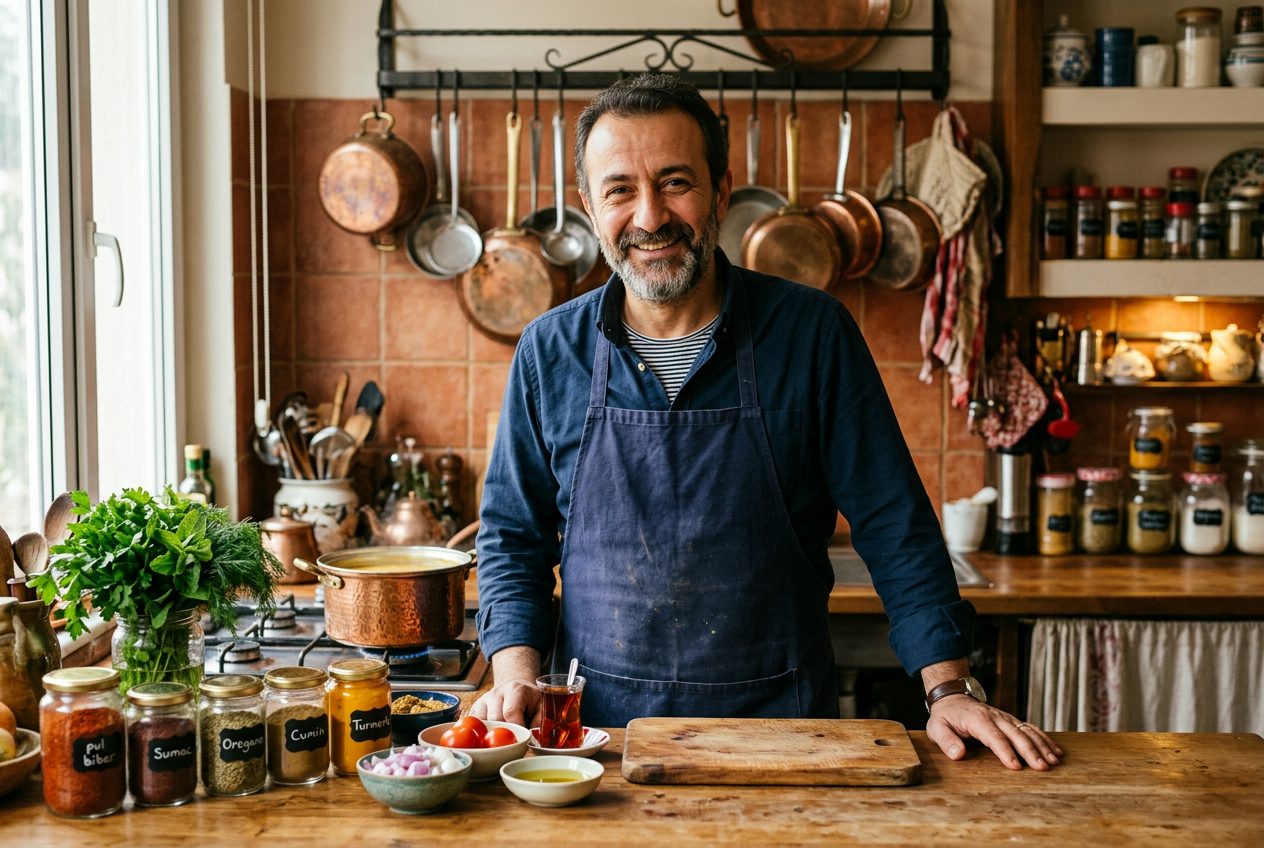
Cooking from the heart since 1998
Personal Story
A Grandmother's Kitchen,
a Lifetime of Flavour
"She never measured anything. It was always a handful of this, a pinch of that — and every dish tasted like home."
I grew up in the hillside neighbourhoods of Giresun, a city perched above the Black Sea where the air carries the faint sweetness of hazelnut orchards and the salt of crashing waves. My earliest memories are inseparable from my grandmother Fatma's kitchen — a small, wood-fired room where copper pots steamed on an iron stove and bundles of dried herbs hung from the rafters like green chandeliers.
Fatma Hanım was not a chef in any formal sense. She had never opened a cookbook in her life. But she possessed something rarer: a deep, intuitive understanding of ingredients, seasons, and the quiet patience that turns simple food into something extraordinary. I spent my childhood summers at her side, watching her transform cornmeal into soft, golden kuymak, coax flavour from dried beans with only a handful of butter and time, and fold paper-thin pastry with hands that seemed to know the dough as intimately as an old friend.
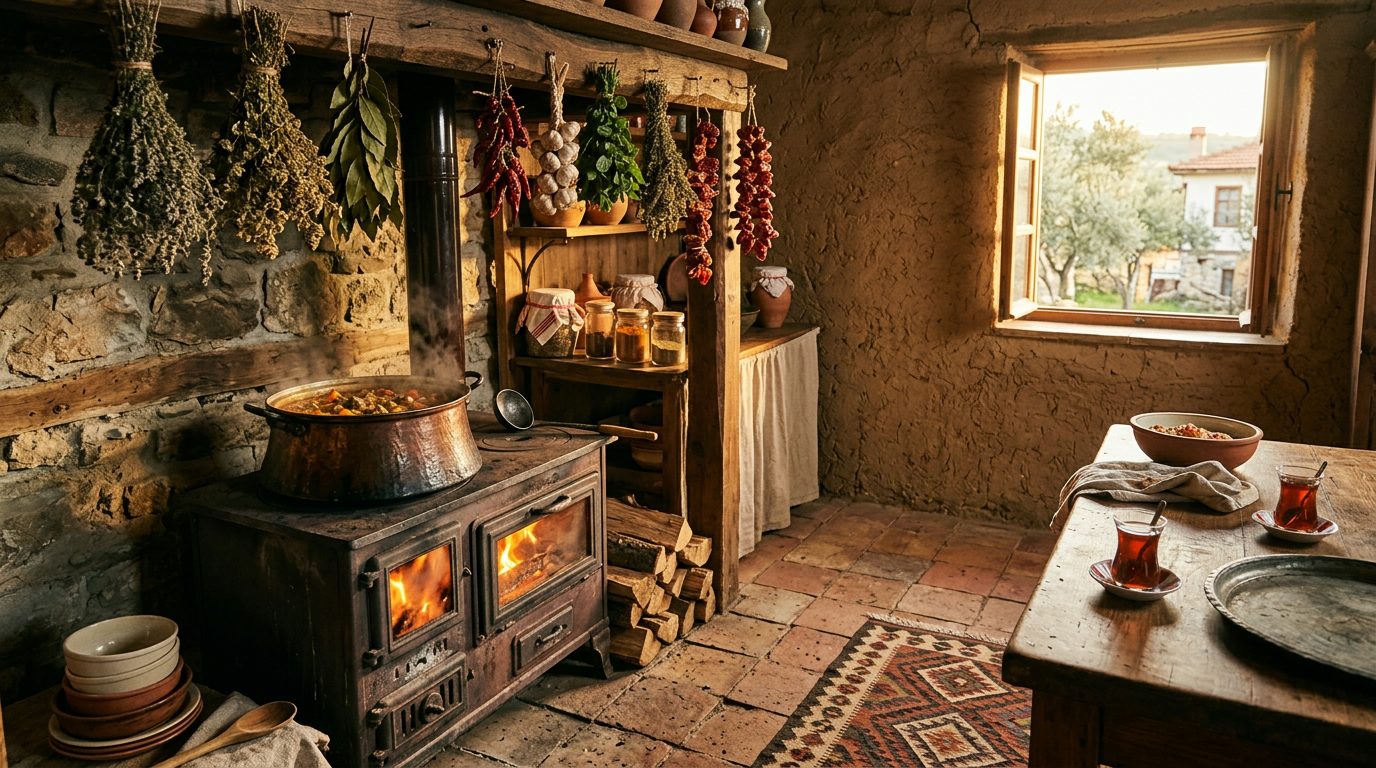
A kitchen like Fatma Hanım's — copper, fire, and generations of knowledge.
The Black Sea region of Türkiye holds a culinary tradition that is startlingly different from the kebab-and-meze image most of the world associates with Turkish food. Here, corn replaces wheat in breads and porridges. Hamsi — the silver anchovy pulled fresh from cold Black Sea waters — appears in everything from pide to rice pilaf. Hazelnut milk thickens desserts. Wild herbs, foraged from hillsides after the spring rains, find their way into cheese-filled börek and fragrant egg dishes. It is a cuisine of abundance drawn from sea, forest, and mountain — honest, deeply local, and almost entirely unknown outside the region.
When I left Giresun to study engineering in Istanbul, I discovered something uncomfortable: nobody cooked this way anymore. My flatmates ordered delivery. My colleagues ate sandwiches at their desks. Even back home, younger generations were reaching for packaged foods, and the old recipes — never written down, passed mouth to ear in smoky kitchens — were quietly disappearing with the people who carried them.
The recipes my grandmother cooked were never written down. They lived in hands, not on paper. When she passed away in 2019, I realised I was one of the last people who had watched her cook — and that felt like a responsibility I could not ignore.
I started murat-dogan in the winter of 2020, during long lockdown evenings spent calling aunts and cousins, piecing together half-remembered recipes from fragments of conversation. I cooked obsessively, failing and trying again, measuring for the first time in my life the amounts that Fatma Hanım had always guessed by feel. I photographed everything on my kitchen table by the light of a single lamp.
What began as a personal archive of grief and memory grew into something I had not expected: a community. Home cooks in Istanbul, Turkish diaspora families in Germany, food writers in New York — people who had eaten at a Turkish grandmother's table and wanted to return, or who had never tasted Black Sea cooking and were hungry to try. Every message I receive from someone who made kuymak for the first time, or who recognised a dish their own grandmother used to make, reminds me why this blog matters.
The recipes you find here are rooted in the Black Sea tradition but adapted for home kitchens anywhere in the world. I test every dish multiple times, I explain the why behind every step, and I always tell you where the recipe came from — because food without its story is just instructions. I believe Turkish home cooking deserves a place at the global table, and I am grateful every day for the chance to put it there.
This is not a restaurant. It is not a brand. It is a kitchen table, and you are always welcome at it.
Murat Doğan
Cook, writer & keeper of recipes — Giresun, Türkiye
My Kitchen Philosophy
Every dish I prepare is shaped by three simple principles that have guided my cooking since childhood — rooted in the land, in tradition, and in the joy of sharing.
Seasonal & Local
I source my ingredients from Black Sea villages and local bazaars, choosing produce at the peak of its season. When the ingredient is honest and fresh, the cooking takes care of itself.
Traditional Techniques
Slow simmering, wood-fire baking, hand-rolled dough — I refuse to shortcut methods that generations refined over centuries. Respecting old ways is how we keep Anatolian cuisine alive.
Sharing Culture
In Türkiye, a meal is never just food — it is a story, an invitation, a memory. Every recipe I share here carries a piece of family history that deserves to be passed on around your table too.
"The kitchen is where memory lives. I cook not to impress, but to remember — and to give others something worth remembering."— Murat Doğan, murat-dogan